
Across the state of Iowa, an innovative approach to urban renewal and community development is taking shape within the walls of aging, historical architecture. Rather than permitting decommissioned landmarks to sit vacant or face complete demolition, property developers, non-profit organizations, and local community leaders are turning to adaptive reuse. This strategy is breathing fresh vitality into historic properties by converting them directly into essential affordable housing options.
The diverse array of buildings currently undergoing this comprehensive transition reflects the varied historical and cultural fabric of the Hawkeye State. Among the notable sites being converted is a 102-year-old Catholic church and school facility located in Waterloo. In Des Moines, a historic military post that has stood for nearly 130 years is similarly being reimagined, while a 69-year-old Lutheran church located just blocks from the Iowa State Capitol is preparing for a new residential mission.
Although these distinct structures originally fulfilled vastly different functions—ranging from religious worship and parochial education to national defense and civic assembly—they now share an identical modern objective. Each site is being systematically revitalized to expand Iowa's available inventory of affordable residential units, demonstrating how disused community anchors can be creatively repurposed to address modern socioeconomic demands.
The demographic and structural realities of Iowa’s built environment make this adaptive approach particularly relevant. According to comprehensive data tracked by the Iowa Finance Authority, Iowa currently possesses the eighth-oldest residential housing stock in the United States. The state agency's housing metrics establish that the median year of construction for residential structures across the state is 1957, underscoring the mature profile of the local housing ecosystem.
Alongside this established, aging residential footprint sits a large and varied collection of underutilized commercial, institutional, and civic buildings. For many municipalities, these dormant structures have historically represented complicated architectural challenges and neglected urban spaces. However, regional developers and community advocates increasingly view these underused properties as valuable opportunities for sustainable neighborhood revitalization.
Confronted with the escalating expenses, supply constraints, and resource consumption associated with brand-new ground-up construction, project leaders across Iowa are opting for creative restoration. Utilizing the existing structural frameworks of historic buildings allows developers to preserve character-rich craftsmanship while simultaneously bypassing some of the logistical and economic barriers inherent in building entirely from scratch.
One of the most prominent examples of this redevelopment movement is unfolding in Des Moines under the leadership of the youth-focused non-profit organization Starts Right Here. Spearheaded by the organization's founder, Will Keeps, the group is advancing a comprehensive transformation initiative designed to serve some of the community's most vulnerable populations.
Known as "Stay by Starts Right Here," or simply "Stay," the innovative project combines dedicated youth housing with integrated educational facilities. By designing an environment specifically catered to at-risk youth, the initiative targets a critical gap within the broader housing market, offering both secure shelter and structured resources to help young residents build stable, independent futures.
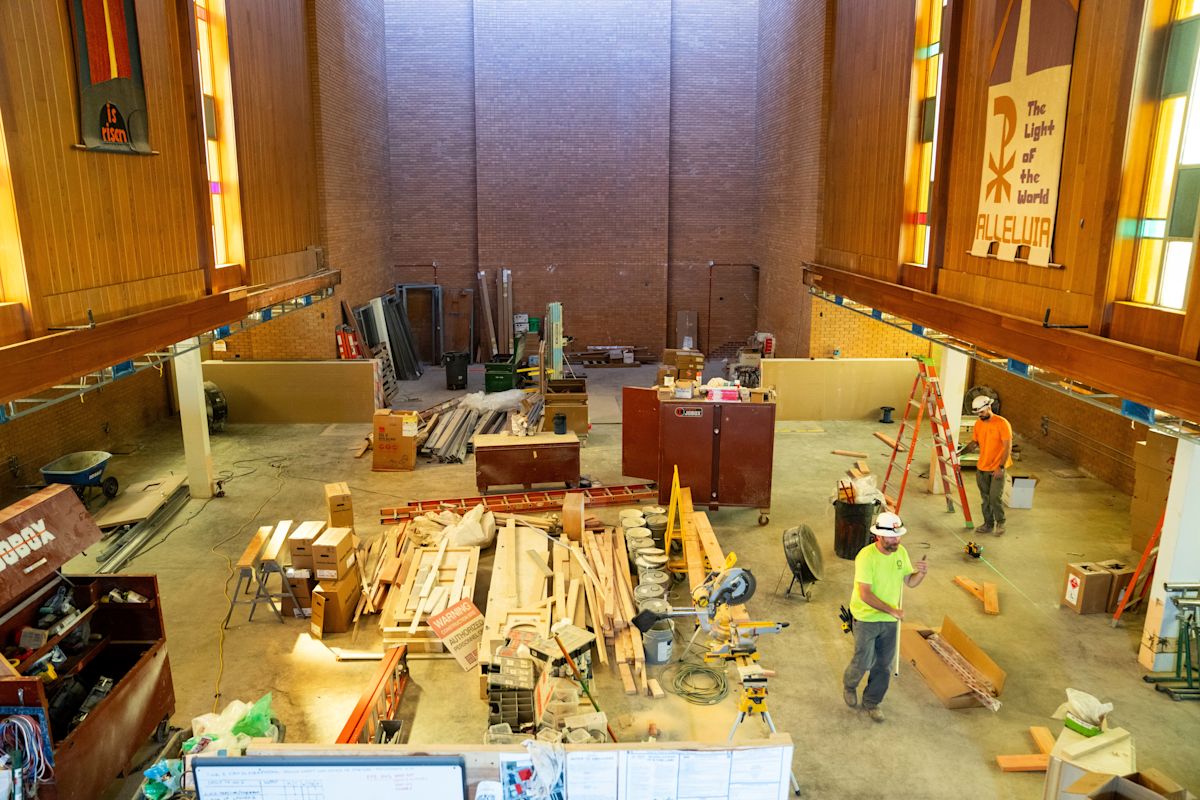
The physical setting for this supportive housing project is a historic church building that previously housed the Elim Christian Fellowship congregation. Rather than allowing the long-standing ecclesiastical property to deteriorate, construction teams have been actively reworking the interior architecture to accommodate individual residential rooms alongside supportive programmatic spaces.
Active development on the Stay facility progressed through late August 2026, as construction crews worked steadily within the former sanctuary and fellowship areas. Architectural renderings and ongoing building inspections highlighted the transition from open communal halls into tailored living quarters, designed to provide safety, structure, and dignity for participating youth.
The project undertaken by Will Keeps and Starts Right Here illustrates how adaptive reuse projects can seamlessly merge housing creation with on-site social services. By establishing housing and educational programming under the same roof, the converted facility addresses the underlying complexities of youth vulnerability through a unified, holistic support system.
The ongoing conversion projects in Waterloo, Des Moines, and other Iowa communities highlight the broader utility of preserving architectural heritage while tackling housing scarcity. Instead of expanding outward onto undeveloped land, cities can efficiently address housing deficits by looking inward and modernizing the structural inventory already present within established neighborhoods.
Furthermore, the repurposing of these historical assets delivers tangible stabilizing effects to the surrounding communities. Breathing new life into long-standing properties enhances neighborhood aesthetics, reduces blight, and reinforces local economic vitality by bringing active residents back to established residential and commercial corridors.
As Iowa continues to navigate the economic realities of an aging housing stock and a persistent need for affordable residential living, the conversion of historic buildings offers a practical, forward-thinking blueprint. By aligning preservation goals with housing needs, communities throughout the state are ensuring that historic landmarks remain functional, protective, and valuable assets for decades to come.






(0)