
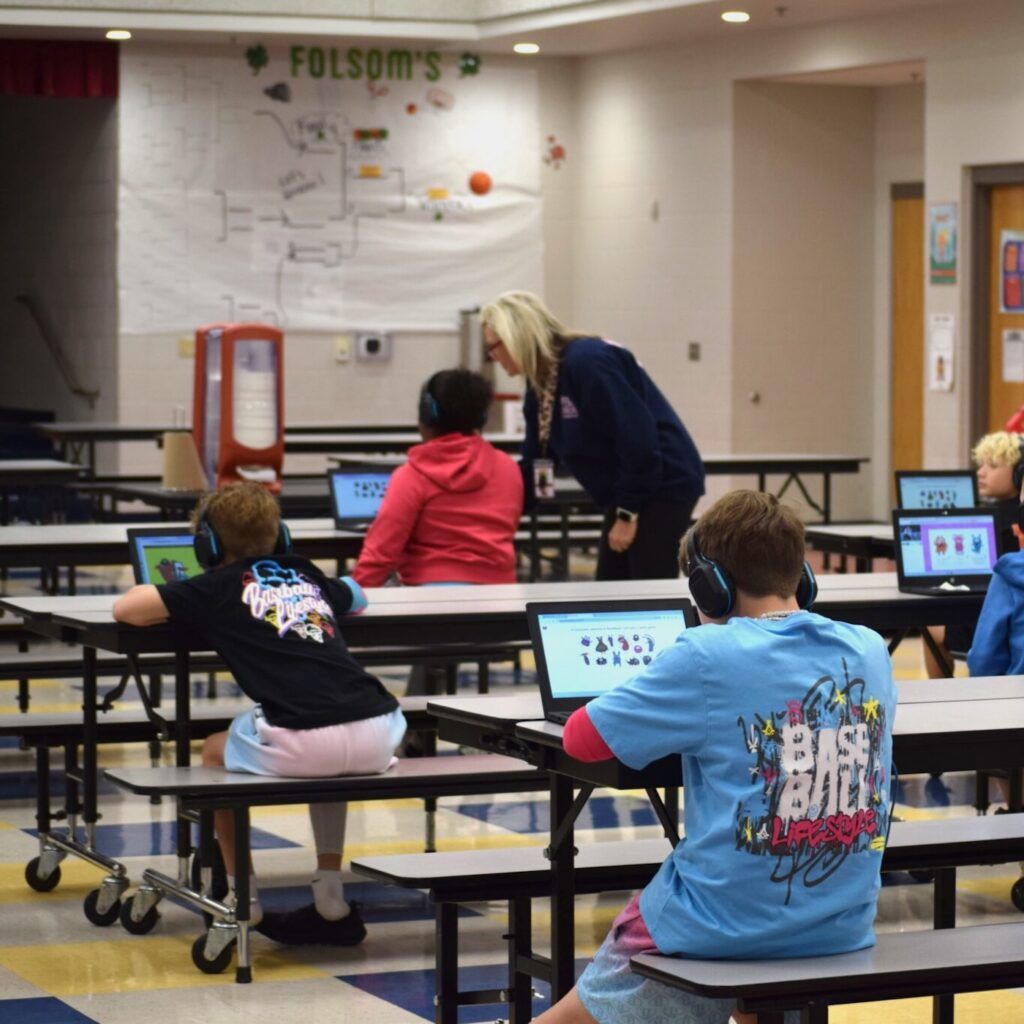
Public educational institutions across Ohio are navigating a major shift in instructional guidelines following a statutory mandate that required every traditional public school district, community school, and STEM academy to establish a comprehensive artificial intelligence policy by July 1, 2026. As educators and students return to classes, the central challenge has transitioned from drafting formal bureaucratic documents to making those frameworks functional and effective within day-to-day academic environments.
Guidance provided by the state’s model policy directs school districts to establish explicit parameters across multiple areas. These include setting ground rules for staff and student application of technological tools, safeguarding personal privacy, upholding ethical standards, monitoring third-party platforms, evaluating educator practices, and analyzing how automated technologies alter core educational objectives and testing procedures.
Despite addressing these essential compliance categories, existing frameworks leave a critical instructional dilemma unresolved. Teachers still face the complex challenge of determining whether artificial intelligence software has actively supported a student’s cognitive development or merely functioned as a substitute mechanism to generate finished assignments.
To bridge this operational gap, educational experts recommend incorporating an explicit proof-of-learning standard into the subsequent implementation phase of Ohio’s school policies. This proposed mechanism aims to evaluate how students interact with digital systems whenever automated tools play a substantial role in academic submissions.
The necessity for such a standard stems directly from the deceptive nature of generative software. Advanced platforms can easily generate highly articulate prose and complex answers, creating a superficial appearance of mastery even when a student lacks the foundational knowledge needed to spot fabricated citations, unverified claims, or flawed fundamental premises.
Relying primarily on algorithmic detection software presents significant pitfalls for classroom management. Emphasizing detection often shifts the instructional environment into an adversarial struggle focused on concealment and evasion, diverting attention away from the essential question of what genuine intellectual effort the student contributed to the finished product.
Under the proposed proof-of-learning framework, students submitting graded coursework that was materially shaped by automated tools would provide a concise four-part explanatory note. This documentation focuses on uncovering the student's independent judgment rather than subjecting them to intrusive digital surveillance methods.
The first component requires learners to outline the precise instructions and inquiries they submitted to the automated system. By documenting the initial prompt, students establish a clear starting point for how the technological tool was directed to assist their inquiry.
Second, the student must document the specific recommendations or generated content they altered or discarded entirely. Alongside this, the third requirement obligates the student to record the facts, sources, or assertions they verified through independent research, proving that automated claims were cross-referenced against authoritative academic materials.
The final element of the standard requires students to articulate what skills, concepts, or explanations they are now capable of executing independently without the assistance of an automated program. This ensures that the interaction resulted in authentic comprehension rather than mere technological dependence.
Proponents emphasize that this standard must remain tightly targeted so it does not overwhelm students or teachers with unnecessary administrative paperwork. Routine software functions such as standard spellcheck tools, basic autocomplete features, and customary document formatting would be completely exempt from disclosure mandates.
Instead, the standard applies exclusively when digital systems materially influence research methodologies, reasoning pathways, programming code, creative design choices, written text, or submitted conclusions. The focus remains locked on substantial intellectual contributions.
The practical utility of this approach spans across various academic disciplines without requiring raw chat transcripts. In a history course, for instance, a student could detail how a program proposed three potential historical catalysts, but the student discarded one option after discovering it conflicted with assigned primary source readings.
Similarly, in technical subjects such as computer science, a pupil might record that auto-generated code malfunctioned when subjected to an edge-case test, detailing the manual modifications needed to resolve the bug. In career and technical education courses, learners could explain how an automated procedural guide was adjusted after being compared against official equipment manuals and workplace safety standards.
This educational initiative arrives at a unique moment for technology governance in Ohio. Broader legislative attempts to regulate artificial intelligence across the state stalled earlier in the year due to jurisdictional uncertainties over enforcement capabilities, as reported by the Ohio Capital Journal.
Because the Ohio General Assembly set a strict compliance deadline and the Department of Education and Workforce produced baseline model guidance, local school districts possess clear authority to act. This established administrative structure positions K-12 education as a practical testing ground for creating workable models of human oversight while statewide regulatory discussions continue.
Beyond immediate classroom needs, instituting verifiable human oversight prepares students for the realities of modern employment. Professional environments increasingly demand personnel who can effectively supervise automated systems, spot algorithmic errors, protect confidential materials, recognize when human intervention is mandatory, and maintain ultimate accountability for finished results.









(0)