
The Supreme Court on Monday evening issued a 7-2 decision blocking the United States Postal Service from enforcing an emergency rule that would have drastically altered the handling of mail-in ballots ahead of the upcoming midterm elections. The ruling puts an immediate halt to an effort backed by the Trump administration that critics warned would have created widespread disruption and disenfranchised voters across the country.
Under the contested directive, which was issued by postal authorities last month, postal workers would have been instructed to refuse delivery of mail-in ballots unless they were processed through newly established, untested systems developed on short notice. The administration defended the policy as a necessary step to enhance the visibility of Federal Ballot Mail and detect potential election fraud, despite an absence of evidence demonstrating widespread fraud in American elections.
State and local election administrators nationwide raised urgent alarms following the rule's announcement, warning that implementing sudden procedural overhauls would trigger mass chaos and prevent eligible citizens from voting. Officials emphasized that ballot printing and the distribution of return envelopes were already actively underway in most jurisdictions, leaving election authorities with neither the time nor the resources to restart their operations from scratch.
Legal experts and state leaders pointed out that the postal mandate represented an unprecedented federal intrusion into state-run voting administration. In effect, the measure would have subordinated a major portion of the nation’s decentralized voting infrastructure to the authority of a single federal agency for the first time in American history, threatening the traditional division between federal oversight and state election administration.
The practical implications of the postal rule were substantial, given the growing reliance of American voters on remote balloting methods. In the 2024 elections, roughly one out of every three voters cast their ballots through the mail, and several states currently conduct their elections entirely via postal voting. Abruptly refusing delivery of unverified ballots on the eve of the midterms would have jeopardized election operations across these jurisdictions.
Despite the critical nature of the dispute, the Supreme Court’s formal order was strikingly concise, spanning only three sentences in an unsigned decision. The high court concluded that the federal government was unlikely to succeed on the merits of its challenge against a preliminary injunction previously issued by a federal district court, while also determining that the equitable factors required for emergency relief did not justify issuing a stay.
This brief three-line order stood in sharp contrast to the court’s handling of an earlier challenge to the administration's broader voting directives just a month before. In that previous instance, the justices issued a detailed ten-page unsigned opinion dismissing a lawsuit on procedural and standing grounds, characterizing the state-level challenge as an impermissible legal contest over the internal deliberations of the executive branch.
That earlier procedural ruling came even as President Donald Trump publicly posted on his personal social media account about his objective to eliminate mail-in ballots altogether. However, while the court rejected that initial attempt, it left open the possibility that states could mount valid legal challenges once concrete administrative rules were finalized and implemented.
Seizing that opening, a coalition of states led by California tailored their arguments to appeal directly to the conservative majority’s preferred legal doctrines. The plaintiffs strategically invoked the major-questions doctrine—a standard frequently utilized by the high court's conservative wing in recent years to rein in ambitious federal regulatory actions initiated by executive branch agencies.
In their legal filings, state officials argued that the postal service possessed no statutory authorization under federal law to refuse the delivery of election ballots. The brief emphasized that while Congress has explicitly enumerated specific types of materials that postal authorities are lawfully permitted to reject, mail-in election ballots are not included on that statutory list.
The plaintiff states drew direct comparisons to prior high-profile Supreme Court rulings that struck down major federal initiatives, including President Biden’s student loan forgiveness program, workplace COVID-19 testing mandates, and power-plant emissions rules from the Obama administration. State attorneys maintained that an agency attempt to reshape national election procedures immediately before an election carried even greater political and legal consequence than those previous major-questions disputes.
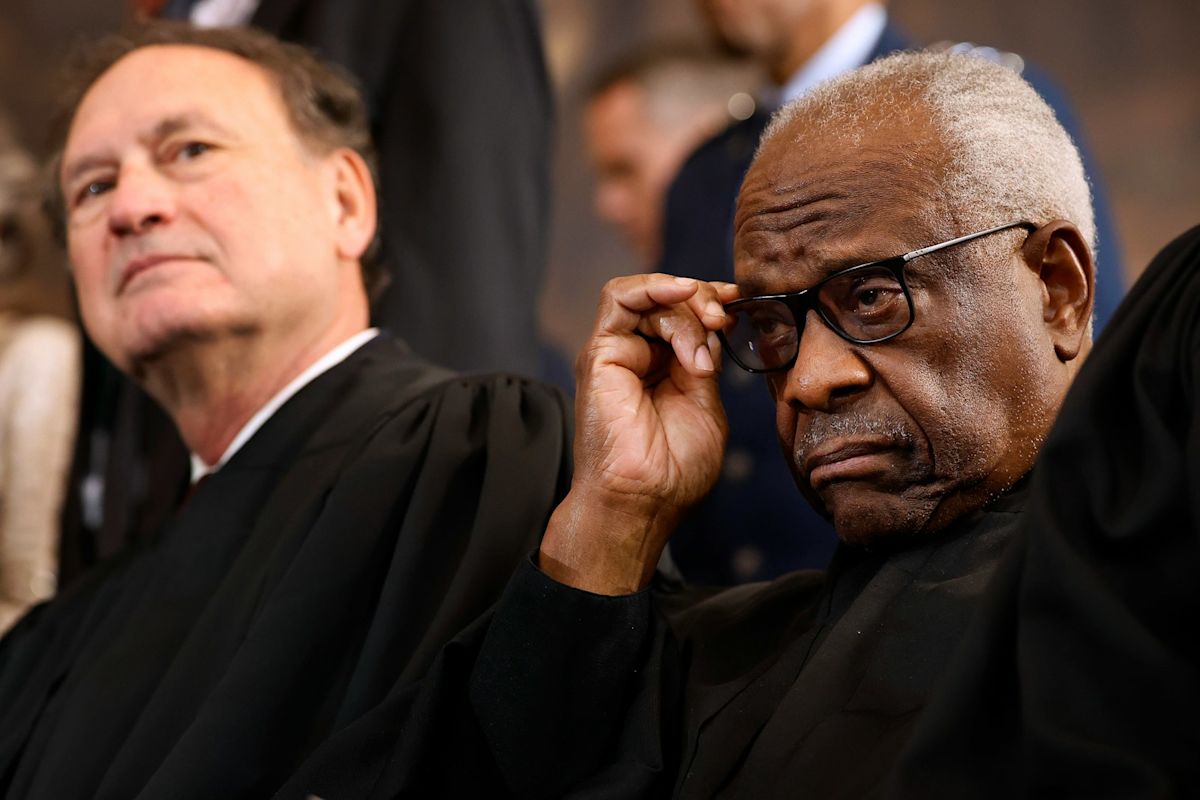
While the majority sided with the states to avoid last-minute electoral confusion, the final vote highlighted significant ideological divisions on the bench. Justices Clarence Thomas and Samuel Alito dissented from the decision, expressing support for the Trump administration’s postal policy and indicating an openness to allow the registration mandates to take effect.
Justice Brett Kavanaugh authored a separate concurring opinion that added further complexity to the outcome. While Kavanaugh agreed with the majority to halt the rule close to the midterm elections due to equitable considerations, his opinion signaled a potential willingness to approve and enforce similar postal regulations during future election cycles when timing constraints are less pressing.
Legal observers have noted that although the decision successfully averted near-term electoral disruption, the willingness of multiple justices to consider broad federal restrictions on postal balloting remains a focal point of ongoing legal debate. For the moment, the ruling ensures that mail-in voting procedures will proceed under established state rules as voters prepare to cast their ballots in November.









(0)