
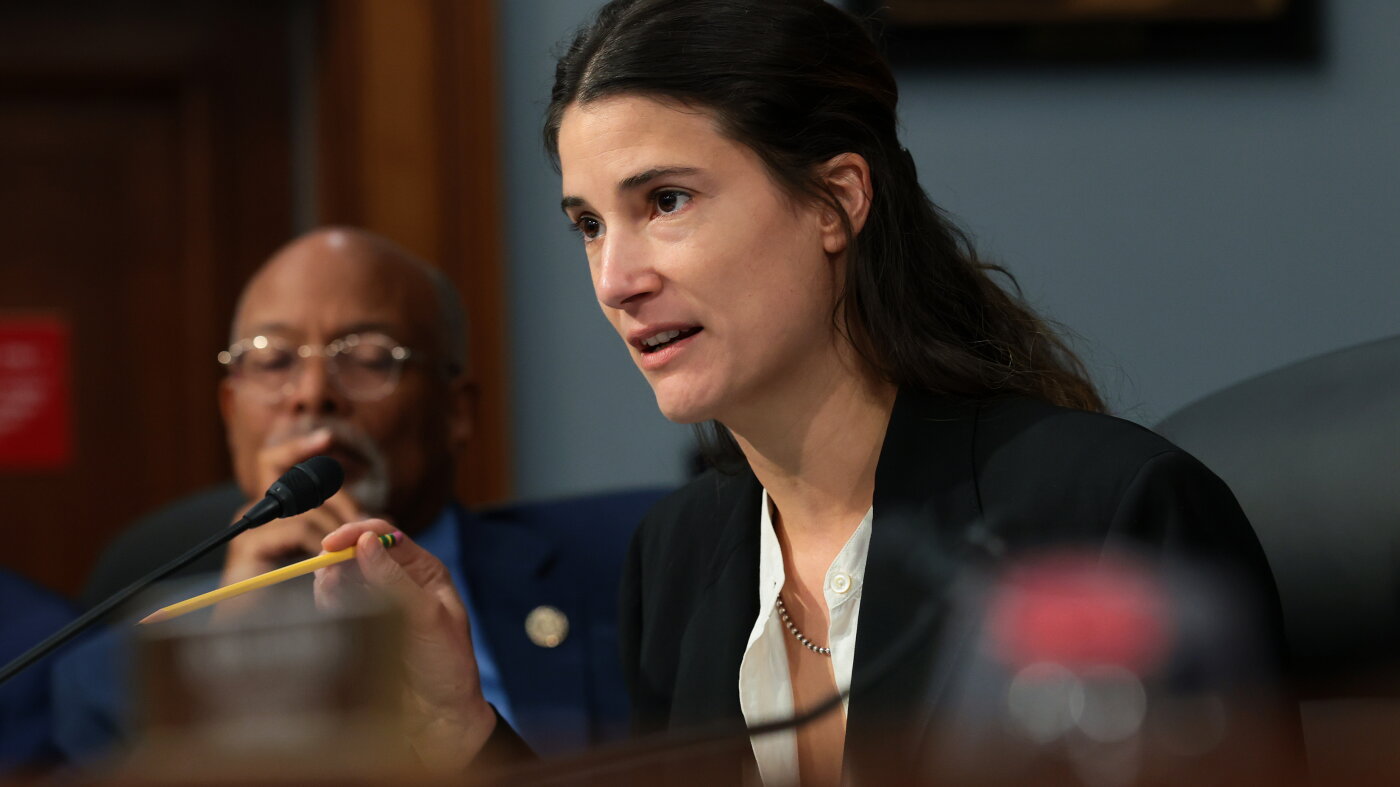
The battle for control of Congress is increasingly converging on a single, fiercely independent stretch of southwest Washington state, where a Democratic incumbent and a Republican challenger are locked in one of the nation's most closely watched midterm contests.
Washington's 3rd Congressional District encompasses a diverse patchwork of communities — urban neighborhoods, industrial corridors, rural towns, and both inland and coastal areas. The district has cultivated a reputation for political independence, frequently defying easy categorization along the traditional left-right spectrum.
That independent streak has made the 3rd District a rare prize. President Trump carried the district three times, a testament to its willingness to split tickets and back candidates from different parties depending on the year and the office. Yet in 2022, Democratic Rep. Marie Gluesenkamp Perez succeeded in flipping the seat from red to blue, demonstrating that the district's voters are not beholden to any single party's banner.
Now, Republican state Sen. John Braun is hoping to reclaim the seat for his party, arguing that the district's unpredictable nature gives him a genuine opening. Braun, who runs a small manufacturing business, said the 3rd District stands apart from the increasingly predictable political landscape found in many other parts of the country.
"A lot of districts these days are pretty predictable in terms of their politics," Braun told NPR in an interview at his business. "The third is not. You got to go earn those votes."
The stakes could hardly be higher. With control of the House of Representatives hanging in the balance, every competitive seat takes on outsized importance. Democrats are widely seen as needing to hold districts like Washington's 3rd if they hope to preserve their ability to shape the national legislative agenda.
Gluesenkamp Perez's path to reelection is complicated by the fact that she has angered a portion of her own party's base, according to reporting on the race. That friction reflects a broader tension facing moderate Democrats in swing districts, who must often balance the demands of national party activists against the more pragmatic expectations of their local constituents.
At the same time, Braun faces his own headwinds. The Republican challenger must contend with voter backlash against the party currently in power, a dynamic that has historically shaped midterm elections and could weigh on GOP candidates even in districts that have leaned Republican in past presidential contests.
The district's hybrid character — blending urban, industrial, and rural interests across inland and coastal geography — means candidates must appeal to a wide range of voters whose priorities can diverge sharply. Economic concerns tied to manufacturing and industry may resonate in some communities, while environmental and coastal issues could dominate in others.
Both campaigns appear to be treating the race as a contest that must be won rather than one that can be taken for granted. Braun's comment that votes must be earned underscores the district's reputation for rewarding candidates who engage directly with local concerns rather than relying on national party branding.
The outcome could also offer a window into broader national trends. If a Trump-won district can be held by a Democrat, it would signal that split-ticket voting remains alive and that moderate candidates can still navigate polarized times. If Braun prevails, it would suggest that the political gravity of a district's presidential leanings may ultimately prove decisive.
National observers are watching the race closely because it sits at the intersection of several key questions heading into the midterms: how much weight voters give to party control in Washington, how candidates handle intraparty disagreements, and whether local factors can outweigh nationalized messaging.
For Gluesenkamp Perez, the challenge is to retain the coalition that powered her 2022 upset while managing dissatisfaction from parts of her base. For Braun, the task is to harness frustration with the governing party without alienating the independent-minded voters who have historically decided close races in the district.
The contest has drawn attention far beyond Washington state's borders, serving as a bellwether for how some of the nation's most competitive seats may tilt in the broader struggle for Congress. With so much riding on a single district, both parties are likely to invest heavily in the final stretch of the campaign.
As the race unfolds, the 3rd District's voters will once again be asked to decide whether their independent streak leads them to keep a Democrat in the seat or return it to Republican hands — a choice that could help determine which party wields the gavel in the House come January.


(0)