
In Arizona's sprawling 5th Congressional District, a Republican stronghold where victory in the primary often guarantees a seat in Washington, an unexpected political dynamic is unfolding. Mark Lamb, the former Pinal County sheriff and current GOP nominee, is facing headwinds not from a surging Democratic challenger, but from a quiet yet significant erosion of support among a key constituency: Latter-day Saints women.
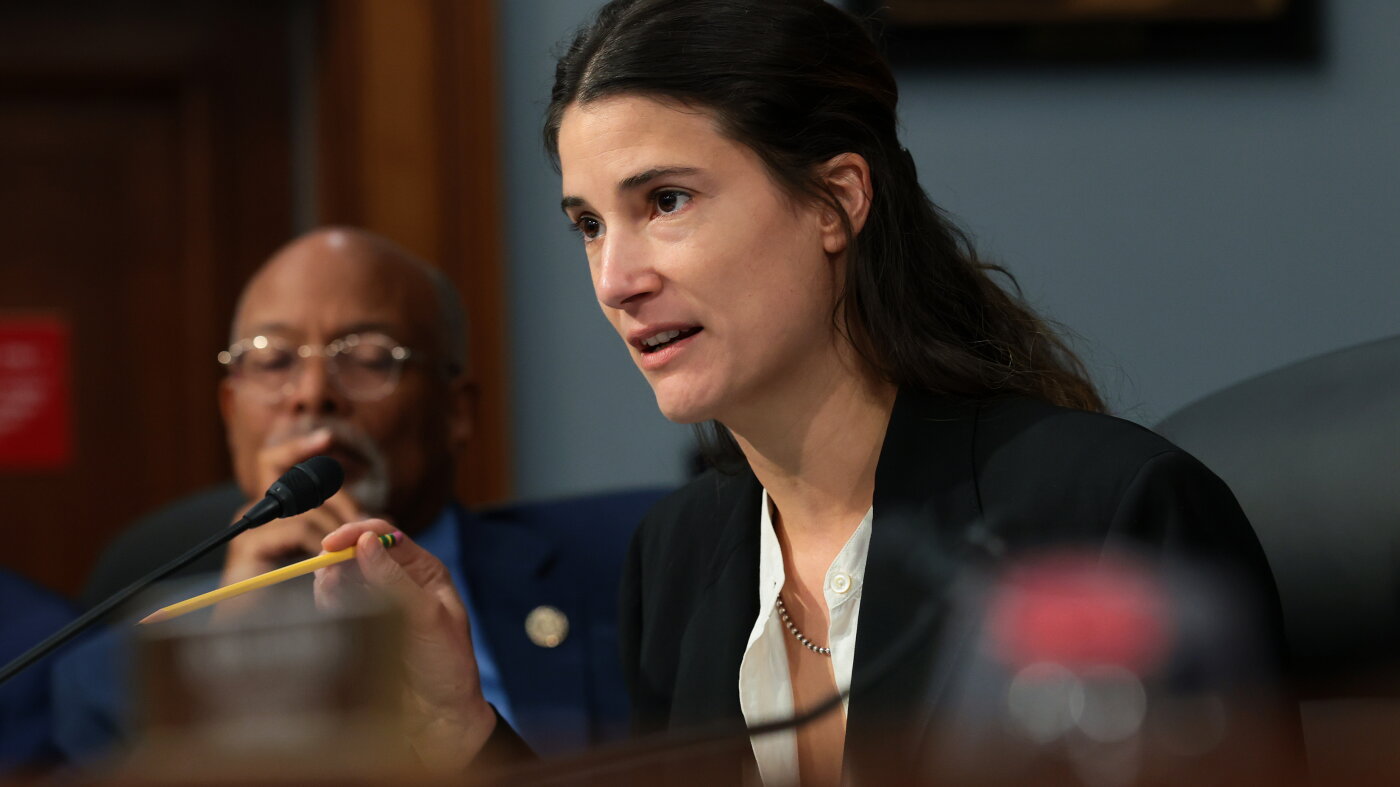
Kimberly Tait, a lifelong Republican from Gilbert, Arizona, represents a growing sentiment in the district. Tait, who switched her voter registration to independent in 2016, describes herself as politically moderate and conservative. Her departure from the party, she explained, was not a rejection of conservative principles but an inability to reconcile those principles with the direction of the Republican Party under Donald Trump's leadership.
"The MAGA movement in and of itself is — it's just really gross to me," Tait said, summarizing her discomfort. This political identity crisis, as she describes it, set the stage for her current dilemma. As a member of the Church of Jesus Christ of Latter-day Saints, Tait is now confronted with a candidate on her ballot who she believes stands in direct opposition to the values she holds dear.
Lamb's campaign slogan, "God, Family, Freedom," is a familiar refrain in conservative politics, designed to resonate with faith-based voters. For Tait, however, the slogan rings hollow. "The candidate and all that they represent is the antithesis of that," she stated plainly. Her assessment is based on a series of accusations that have trailed Lamb since his time as sheriff, including allegations of sexual misconduct and racist remarks.
While Lamb maintains his membership in the LDS church, Tait and other Mormon women in the district are questioning the authenticity of his adherence to the faith. "Yes, Mark Lamb is a member of my faith. He also belongs to the Church of Jesus Christ of Latter-day Saints," Tait acknowledged. "But from what I understand about Mark Lamb, the dishonesty that has been displayed in his public and private life is completely contra" — a sentiment that captures the deep disconnect many feel between the candidate's professed values and his alleged behavior.
The 5th Congressional District, which encompasses parts of Maricopa and Pinal counties, is home to a substantial Latter-day Saint population. This demographic has historically been a reliable voting bloc for Republican candidates, drawn by the party's emphasis on family values, religious liberty, and conservative fiscal policy. However, the unique political culture of Mormon voters in Arizona means that character and integrity are not peripheral issues — they are central to electoral decision-making.
The controversy surrounding Lamb is not an isolated incident but part of a broader pattern that has emerged in recent election cycles, where candidates with significant personal scandals have nonetheless secured Republican nominations. This dynamic has forced moderate and faith-driven voters to make difficult choices, often resulting in a split between party loyalty and personal convictions. For LDS women like Tait, the calculus is particularly fraught, as their faith emphasizes honesty, moral conduct, and the sanctity of family life.
Political analysts suggest that even a modest defection among LDS women could have measurable consequences in a district where margins of victory have historically been comfortable but not insurmountable. While Lamb remains the favored candidate in the general election, the enthusiasm gap among this key demographic could dampen turnout or prompt voters to leave the congressional portion of their ballot blank — a phenomenon known as undervoting.
The Democratic candidate in the race, sensing an opening, has begun to tailor messaging that appeals to disaffected Republicans and independents. While the district's conservative lean makes a Democratic victory an uphill battle, the erosion of Lamb's support among LDS voters could make the race closer than expected. In a political environment where every vote counts, the quiet revolt of Mormon women could prove decisive.
Tait's journey mirrors that of many voters in the district who feel politically homeless. She did not abandon her conservative beliefs; rather, she found herself unable to align with a party that she believes has strayed from its foundational principles. "I'm not super progressive politically and I'm really pretty moderate," she explained, highlighting the alienation felt by those who occupy the middle ground in an increasingly polarized landscape.
The LDS community's influence in Arizona politics is well-documented. From state legislature races to national campaigns, Mormon voters have played a pivotal role in shaping outcomes. Their emphasis on civic engagement, combined with a strong sense of community, means that word-of-mouth and personal testimonials — like Tait's — can ripple through congregations and neighborhoods, influencing the decisions of friends and family members.
For Lamb, the path to victory now requires not only rallying his base but also addressing the concerns of voters who question his character. Whether he can do so effectively remains an open question. His campaign has thus far focused on national issues and partisan loyalty, but the accusations of sexual misconduct and racism are not easily dismissed by voters for whom personal integrity is a non-negotiable criterion.
As the general election approaches, all eyes will be on Arizona's 5th District as a bellwether for how faith-based voters navigate the tension between party affiliation and moral conviction. The outcome could signal a shift in the political calculus for Republican candidates in red districts across the country, where the support of Latter-day Saints women — and voters like Kimberly Tait — may no longer be taken for granted.





(0)