
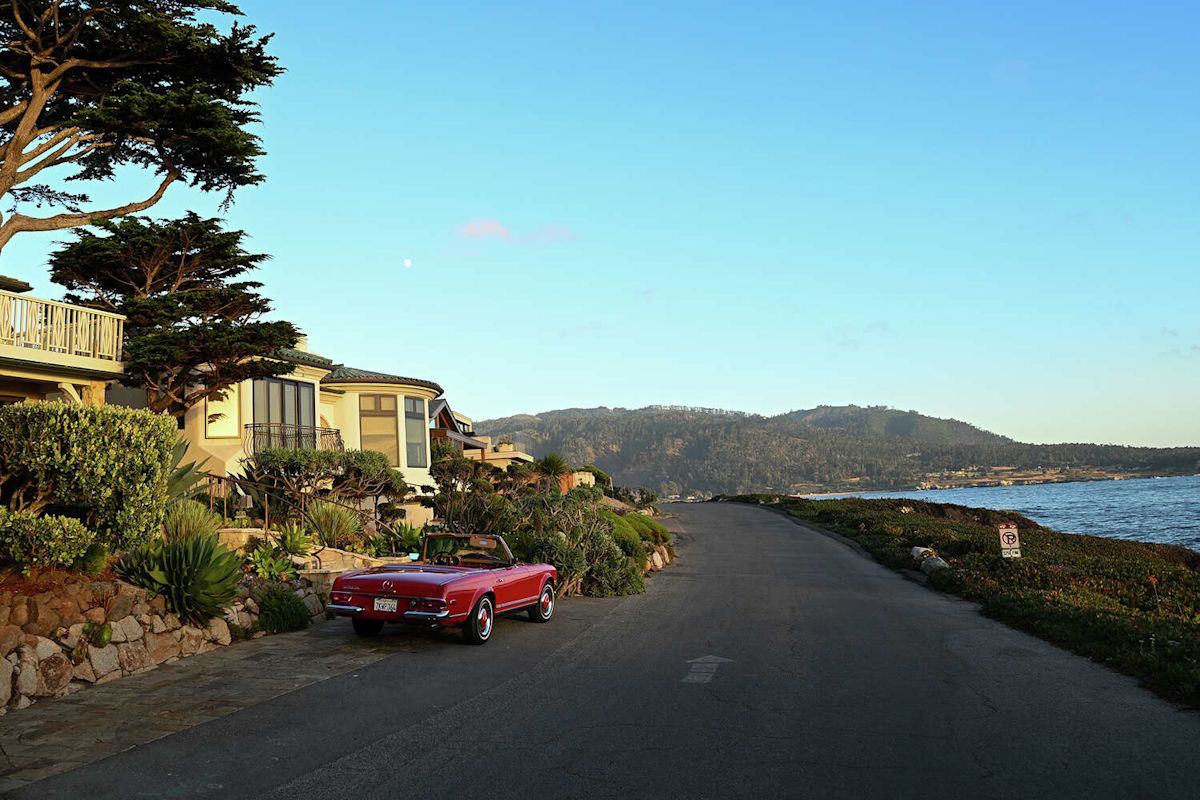
The picturesque coastal community of Carmel-by-the-Sea has officially ended an era, concluding a 110-year tradition by installing physical street numbers across the municipality. The historic transition marks a fundamental shift for the California enclave, which had long stood apart as a rare holdout against conventional modern numbering systems.
Across the village, numerical addresses are now being mounted on both private residences and commercial properties. In a major symbolic milestone for the community, Carmel City Hall itself recently had its new numbers installed, establishing its official physical location at 662 Monte Verde Street.
For more than a century, Carmel established its municipal identity primarily through what its leaders chose not to do. Rather than embracing rapid redevelopment or standard urban conveniences, generations of local decision-makers prioritized preservation, frequently resisting administrative and architectural changes to maintain the town's walkable beachfront character.
This philosophy of restraint shaped numerous municipal policies throughout the town's history. Local regulations strictly limited building heights to ensure structures would not interfere with the natural tree canopy, mandated the preservation of historic properties rather than allowing them to be torn down, and maintained an unusual, longstanding ban on high-heeled shoes.
The origin of the non-address custom dates back to 1916, when Carmel was first incorporated. At the time, the founding enclave of artists and writers concluded that a formal address system was entirely unnecessary for their small, close-knit settlement, opting instead to navigate their surroundings without standardized house numbers.
As Carmel experienced modest growth during the middle of the 20th century, the directional system inspired an enduring cultural quirk. Homeowners began naming their residences with whimsical, literary, and pun-filled titles, such as "Sandy Pause" and "A Turn of Fraise," further cementing the village's storybook charm and artistic heritage.
The town's non-address practice was eventually codified directly into the municipal code. Under the local legal framework, residences and commercial buildings were formally identified by parcel descriptions relative to the nearest cross-street intersection, with exact designations determined by the community planning and building department.
While the unconventional method functioned smoothly for several decades, the turn of the 21st century brought increasing complications. As the outside world grew more complex, interconnected, and reliant on precise logistical data, Carmel's reliance on intersection descriptions began creating significant everyday friction.
Commercial deliveries presented a persistent challenge under the old framework. Delivery truck drivers regularly found themselves circling Carmel's narrow, winding streets in confusion, struggling to interpret cross-street descriptions or locate specific unnamed properties tucked along the roadways.
Far more concerning to local officials and residents was the impact on public safety. Emergency medical services, including first responders who were deeply familiar with the layout of the town, occasionally faced difficulties locating the exact sites of emergency calls, producing potentially dire consequences.
The movement toward reform gained substantial momentum two years ago during a local political gathering. Carmel Mayor Dale Byrne recalled that the issue became impossible to ignore during a campaign event held in a neighbor's backyard, where an engaged group of residents persistently questioned him about what he intended to do regarding the missing addresses.
Following his election, Mayor Byrne took a close look at the matter as the community debated whether to modernize. The city organized public feedback sessions, while Byrne conducted his own fact-finding by consulting extensively with local police and fire department officials, uncovering alarming details about first-responder experiences.
Byrne highlighted one particularly harrowing case that underscored the inherent dangers of the old system. In that instance, the fire department received an emergency call regarding an individual experiencing a heart attack on a roadway that was notoriously difficult to navigate.
Because responders lacked an exact numerical address, the dispatched fire crew was forced to go door to door in an attempt to determine which house held the patient. A police officer patrolling in a squad car eventually found the individual, and the fire department arrived approximately 10 minutes later to administer life-saving medical care.
Driven by an increasingly vocal majority of residents demanding reform, the Carmel City Council voted last October to formally overhaul the century-old policy. The landmark decision made Carmel the final incorporated city in the United States to adopt a standardized street address system.
With the new numbers now firmly established on storefronts, homes, and municipal buildings, the community has stepped into a new era. While the installation marks the conclusion of a beloved 110-year tradition, city leaders and residents concluded that public safety and modern emergency response capabilities had to take precedence.







(0)