
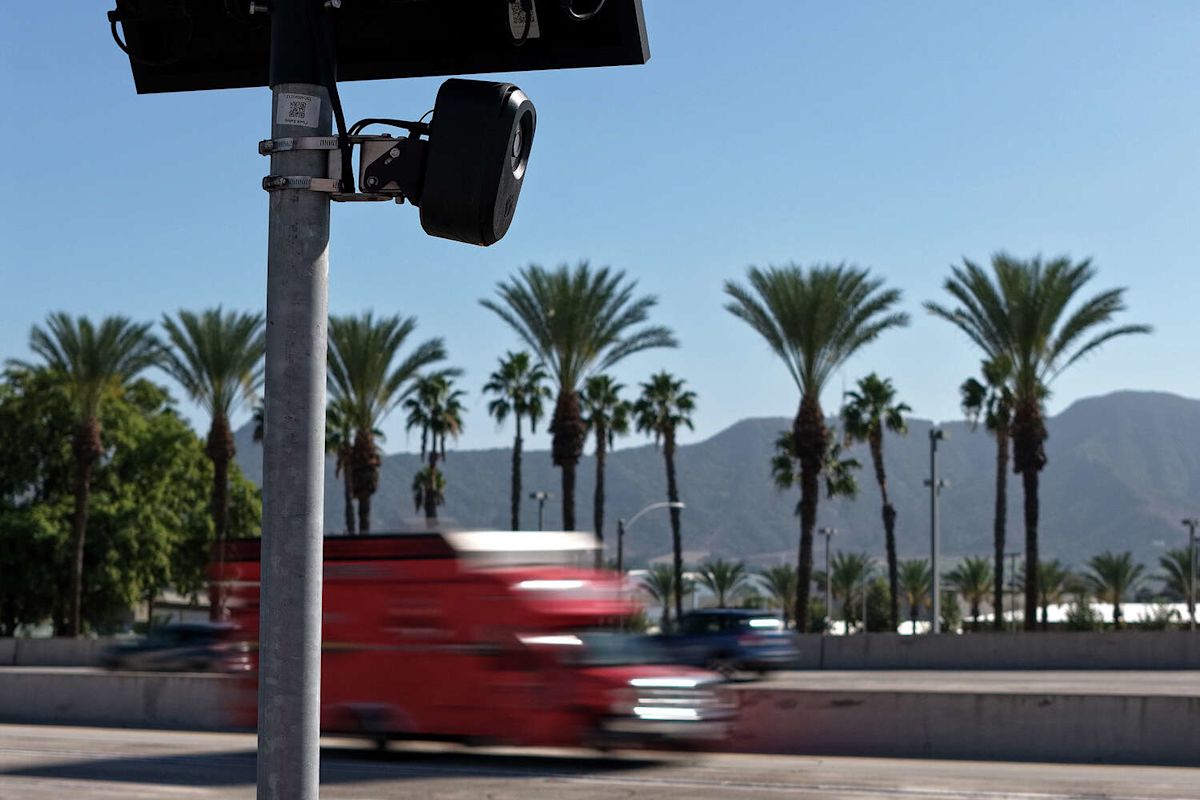
A growing backlash against municipal surveillance has prompted two San Francisco Bay Area communities to cut ties with high-profile automated license plate reader vendor Flock Safety. However, the decision to replace the controversial provider with rival technology manufacturer Axon demonstrates that widespread automated vehicular tracking remains deeply embedded in local law enforcement operations.
The recent shifts arrive on the heels of sustained pressure from community members, privacy advocates, and civil liberties organizations. Critics have increasingly raised alarms regarding mass digital monitoring and publicized allegations that automated license plate database networks have been misused by law enforcement personnel to track individuals without legitimate investigative justification.
In response to community opposition, local governments across the region have pursued divergent paths. A few municipalities, including Santa Cruz and Mountain View, yielded entirely to public sentiment by eliminating automated license plate readers from their policing toolkits altogether.
Other municipalities, however, have opted for a quiet transition between vendors rather than ending the practice of automated tracking. Public agencies seeking alternatives to Flock have turned to a competitive marketplace of vendors that includes Rekor, Genetec, Motorola Solutions, and Axon.
Among these alternatives, Axon has positioned itself as a leading replacement for municipal agencies looking to maintain plate-reading capabilities. Yet privacy advocates stress that substituting one manufacturer for another does not resolve the foundational civil liberties issues inherent to automated vehicular surveillance.
Lisa Femia, a staff attorney representing the Electronic Frontier Foundation, emphasized that the underlying mechanisms of these platforms remain virtually identical across different corporate brands. Both Flock and Axon design equipment to systematically capture imagery of every passing automobile without establishing reasonable suspicion of criminal conduct beforehand.
These automated systems log comprehensive datasets on motorists, recording the exact time, geographical coordinates, vehicle make, model, color, license plate sequence, and unique visual identifiers such as bumper stickers. Femia characterized the municipal transition between the two major surveillance manufacturers as essentially swapping Coke for Pepsi.
Despite ongoing constitutional and privacy objections, municipal police departments continue to strongly defend automated license plate recognition systems as indispensable investigative assets. Law enforcement leaders maintain that camera grids provide vital objective leads during fast-moving criminal probes involving motor vehicles.
During an Antioch City Council session held on Aug. 25, Antioch Police Lt. Michael Mellone addressed the necessity of the technology, pointing out that motor vehicles play a central role in a significant volume of local criminal investigations. He noted that in serious incidents such as armed robberies or shootings, initial eyewitness accounts are often fragmented.
Mellone explained that witnesses frequently can provide only partial vehicle descriptions, travel trajectories, or incomplete license plate characters. In such instances, automated license plate readers enable investigators to convert limited initial clues into precise, actionable investigative leads.
To illustrate the operational value of the camera network, Mellone cited local enforcement statistics from the prior twelve months. Using the city's existing Flock system, Antioch police officers successfully tracked down at least 42 stolen automobiles, resulting directly in 23 criminal arrests.
The political deliberations in Antioch highlighted the complex balance between community skepticism and law enforcement demands. Council member Tamisha Torres-Walker expressed clear reservations about digital surveillance and civil liberties risks, publicly declaring her intention to remove Flock technology from the city.
Nevertheless, Torres-Walker and the remaining council members present voted to approve a new $660,000 municipal contract with Axon spanning a four-year operational period. Torres-Walker did not provide comment when contacted regarding the vote.
The neighboring city of Hayward similarly committed substantial municipal resources toward Axon's license plate tracking technology. The city formally authorized a five-year contract valued at $2.9 million to deploy the company's surveillance infrastructure, though Hayward's municipal communications officer did not respond to inquiries for further details.
The ongoing policy debate reflects wider academic findings concerning the actual operational outcomes of automated license plate readers. Ian Adams, a policing researcher based at the University of South Carolina who co-authored an academic assessment of the technology, noted that public discourse often veers between extreme viewpoints that either completely dismiss or heavily overstate the technology's overall investigative value.
According to Adams, empirical research confirms that because license plate systems are engineered specifically to log and trace vehicles, they demonstrably aid police in recovering stolen cars. However, academic research reveals far less empirical evidence indicating that automated plate readers exert a broader, transformative impact on preventing or solving other categories of crime. Axon did not respond to requests for comment regarding its municipal contracts.




(0)