

On a recent Sunday morning, the pulpit at Brentwood Baptist Church in Houston belonged not to a visiting revival speaker or a guest musician, but to a Democratic candidate for the U.S. Senate. James Talarico, a state representative in the Texas House, asked permission to address the congregation in a personal rather than political capacity, introducing himself not as a candidate but as a fellow Christian. It was a subtle opening gambit, and one that would have been difficult to imagine in most modern Democratic campaigns.
Talarico's own story gave him some credibility for the setting. He is a former middle school teacher, a student at Austin Presbyterian Theological Seminary and a lifelong churchgoer whose grandfather preached Baptist congregations in South Texas. Standing before those worshippers, he recalled the lesson his grandfather offered him as a small child: that at its foundation, Christianity is a simple religion. That framing — plain, familial, unpolished — is precisely what distinguishes his appeal from the polished spiritual branding that often accompanies political campaigns.
He also used the moment to connect private faith to public anxiety. Rather than reciting policy positions, Talarico told the congregation that faith can be a lens for understanding the country's political turmoil, arguing that people who feel heartbroken by the state of the country are demonstrating something valuable rather than something shameful. The emotional register was notably different from the sharp-edged partisanship that dominates cable news, and it reflected a deliberate strategy: speak to the anxieties of church members directly, on their own terms.
Such an approach remains unusual for the party. Religion has rarely been a centerpiece of Democratic messaging, and candidates seeking national office are accustomed to navigating politically polarized electorates where theological language can invite immediate criticism. This midterm election cycle, however, a notable number of Democratic congressional candidates are doing just that, and doing it in races where they have real opportunity to win.
The scale is measurable. At least a half-dozen candidates are ordained clergy themselves, according to the account, and others are currently studying to become ministers. Among them are a megachurch pastor in Dallas, a Methodist minister in Kansas and two members of the clergy in Iowa — candidates whose religious credentials are paired with genuinely competitive races rather than ceremonial campaigns. The presence of seminary students and working pastors suggests a deliberate pipeline: candidates who can speak fluently about scripture without the filter of political staff.
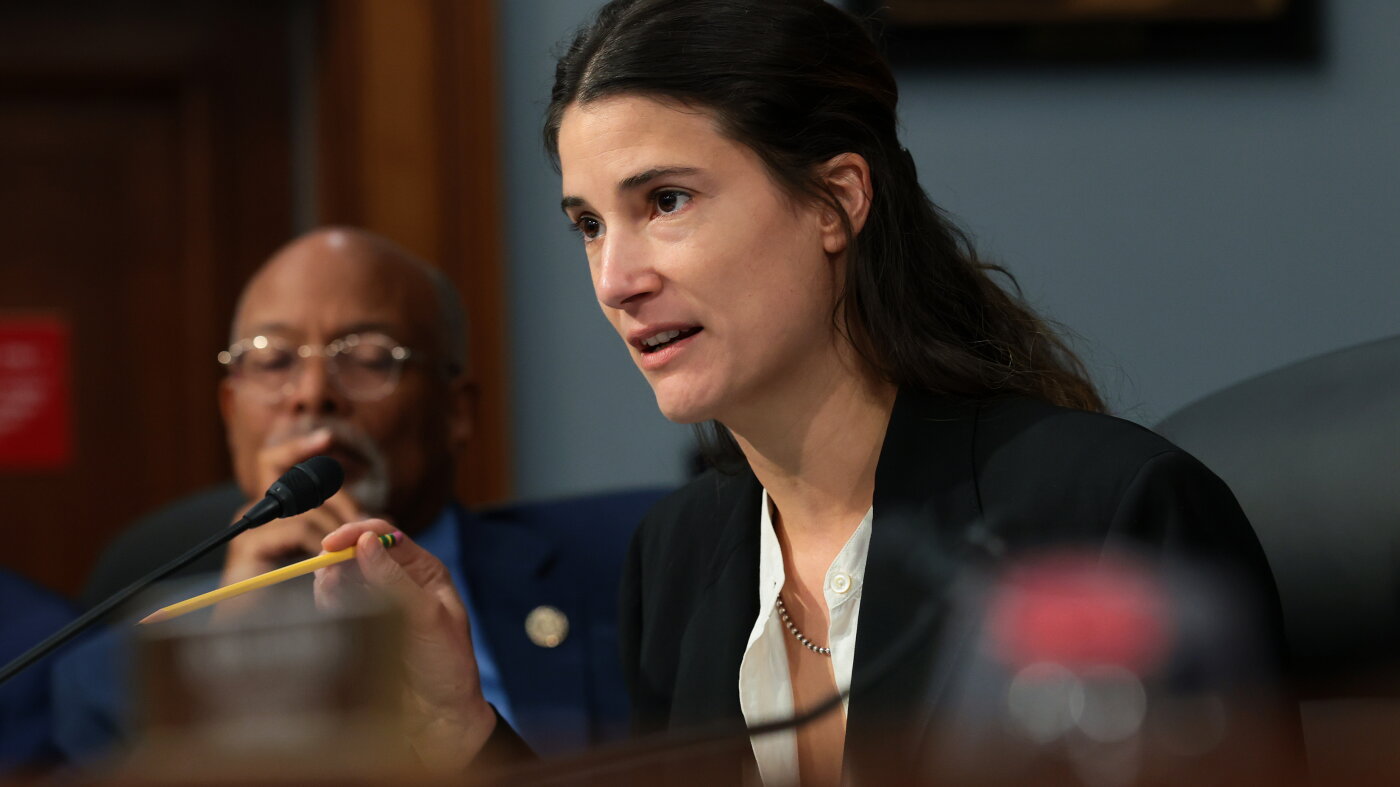
The photographs accompanying the story underscore how broad this trend has become. Four Democratic candidates are featured: Frederick Haynes, Sarah Trone Garriott, James Talarico and Lindsay James. Their backgrounds span pulpit work, seminary study and community organizing, but the common thread is that faith is no longer an incidental biographical detail in their campaigns — it is the organizing message.
On the campaign trail, these candidates have been invoking biblical teachings to make the case for policies involving health care, veterans, immigrants and economic opportunity. That list is not incidental. Each of those issues carries explicit moral weight in congregational settings, and each offers a way to translate scriptural language into legislative argument without appearing to break the informal taboo against preaching policy from the podium.
Their geographic targets are equally deliberate. These are candidates running in states and districts where religion remains an important part of public life, places where church attendance, social networks and moral language still shape political behavior. The strategy depends on persuading voters who may not be persuaded by economics or partisan argument alone, and on doing so before election day rather than after it.
Republicans have responded with sharpened criticism of Democrats' religious rhetoric. Some have gone so far as to suggest that clergy running for public office are not genuine religious figures at all, using a dismissive acronym — "PINOs," for "Pastors In Name Only" — that simultaneously questions their faith and their authenticity. At least one Republican has framed the trend as outright blasphemy, accusing candidates of turning sacred language into political currency. The attack line is designed to cut both ways: it may shore up secular voters' suspicions while also risk alienating religious voters who see it as dismissive of sincere belief.
That tension captures the central risk of the approach. A candidate who speaks from the pulpit can reach voters who are turned off by conventional partisan rhetoric, but the same speech can be repackaged as hypocrisy by opponents. The label "pastor in name only" is an effective political insult precisely because it leaves the candidate no safe defense: any attempt to deny it can sound defensive, while any attempt to affirm it can sound like a campaign pitch.
For Democrats, the bet is that authenticity travels further than apology. Candidates like Talarico are not merely citing scripture; they are documenting years of church involvement and theological study that predate their candidacies. Whether that history reads as conviction or as campaign staging will depend largely on how voters respond once ballots are cast.
For Republicans, the counter-strategy is watchfulness. A campaign built on faith can be difficult to mock without appearing hostile to religion, and it can organize networks — churches, volunteer groups, donor lists — that operate independently of conventional party apparatus. Clergy candidates can also mobilize people who are not deeply partisan but who are deeply involved in their congregations.
The unanswered question is the one hanging over the entire cycle: will it pay off? Voters in a handful of competitive districts and Senate races will render a verdict this November, and the results will indicate whether religious messaging has become a durable Democratic tool or a temporary expedient adopted by a small cohort of candidates. What is clear already is that in this midterm, faith has moved from the margins of the campaign conversation to its center stage — and the pews have become a place where politics is being made.





(0)