
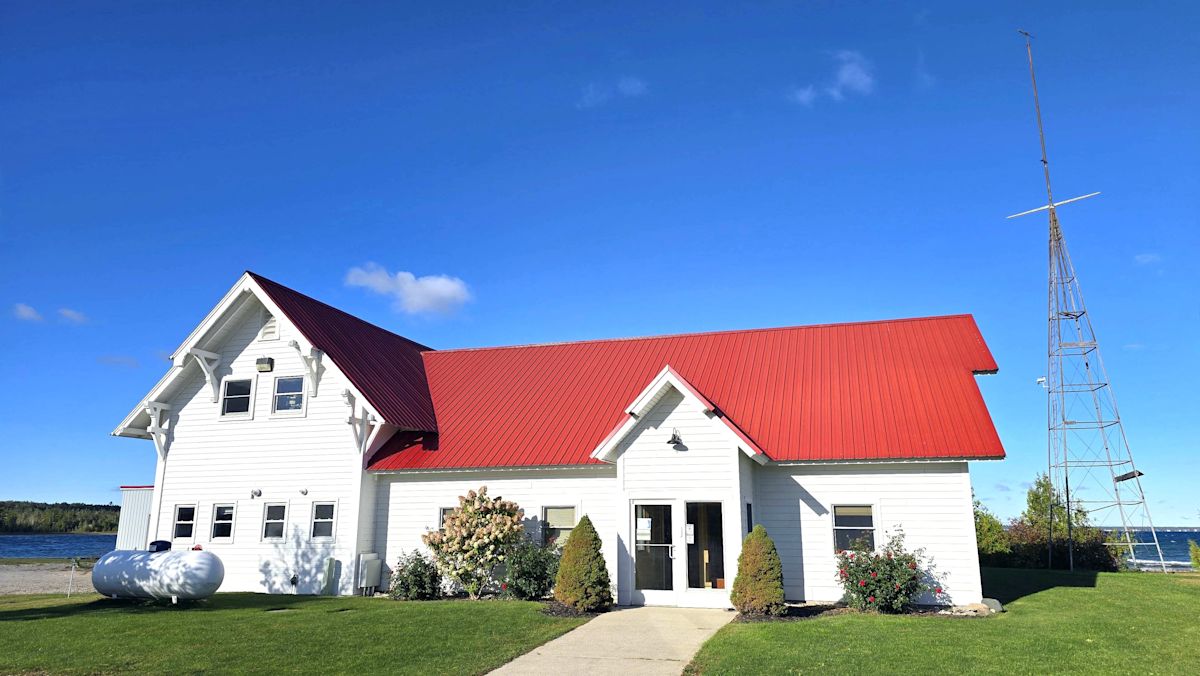
A landmark milestone is approaching along northeastern Michigan's shoreline as the Hammond Bay Biological Station prepares to commemorate 150 years of public service. Scheduled for September 30, the sesquicentennial celebration will highlight the Lake Huron facility's rich and multifaceted heritage, which encompasses maritime rescue efforts, Coast Guard operations, and modern fisheries research, according to a community announcement.
To mark the historic occasion, organizers have organized a full day of commemorative activities for the public. The observance will feature daytime guided tours of the working scientific facility in Millersburg, followed by an evening educational program hosted in nearby Rogers City that will explore both the station’s historical legacy and its ongoing scientific contributions.
The physical facility is situated on Lake Huron at 11188 Ray Road in Millersburg. For the upcoming anniversary, the station will open its doors to the public for scheduled walkthroughs at 1 p.m., 2 p.m., and 3 p.m. on September 30, offering community members a rare opportunity to observe the inner workings of the historic research compound.
Organizers have noted that tour group sizes are limited to ensure a safe and informative experience for all attendees. Consequently, advance registration is required for anyone wishing to attend the daytime sessions. Community members can reserve their spots by sending an email to msigmon@glfc.org or by calling 989-734-4768 at extension 112.
Following the daytime tours, the celebration will shift to downtown Rogers City for an evening program starting at 6 p.m. The gathering will take place at the Rogers Theater, located at 257 N. 3rd St., where community members and researchers will convene to reflect on the station's extended timeline of maritime and scientific work.
The evening presentation will commence with welcoming remarks from leadership figures representing both the regional fishery oversight and local facility operations. Marc Gaden, executive secretary of the Great Lakes Fishery Commission, is scheduled to open the program alongside Lauren Holbrook, who serves as a communications associate for the Hammond Bay Biological Station.
A roster of featured speakers will provide detailed historical and scientific context during the theater presentation. The speaker lineup includes former Rogers City Mayor Beach Hall, who will join Hammond Bay Biological Station science communication specialist Andrea Miehls and station supervisor Nick Johnson to deliver remarks examining the facility's extensive timeline and ongoing research initiatives.
The history of the Hammond Bay site dates back to 1876, when it was initially established as a federal U.S. Life-Saving Service station. Stationed along the northeastern shoreline of Lake Huron, the post was strategically placed to monitor waters that were widely recognized by mariners for their dangerous and hazardous navigational conditions.
During its early decades, the crew stationed at the outpost was dedicated to maritime safety and rescue. The personnel carried out vital operations to assist sailors and commercial vessels navigating the perilous coastal waters, creating a strong tradition of lifesaving along the Great Lakes.
In 1915, the facility underwent an administrative evolution when the U.S. Life-Saving Service merged into the newly created U.S. Coast Guard. Under Coast Guard jurisdiction, the property maintained its dedicated maritime safety role, providing essential monitoring and emergency response services across Lake Huron.
A major transformation occurred in 1950 when the site officially became the Hammond Bay Biological Station. This transition marked a permanent shift away from traditional military and Coast Guard operations toward dedicated biological research and ecological stewardship.
Under its scientific mandate, the station took on the critical mission of addressing ecological threats in the Great Lakes basin. The research agenda placed a strong emphasis on fisheries science, particularly developing measures and methodologies to control populations of destructive, invasive sea lampreys that plagued native fish species.
The research conducted at the station over the decades has played a pivotal role in the broader ecosystem. According to the announcement, the scientific efforts developed at the Millersburg facility have directly supported the protection, stabilization, and restoration of vital Great Lakes fisheries.
Organizers emphasized that the anniversary observance is designed to honor this uninterrupted century and a half of service to the public. The event acknowledges the station's profound, enduring connection to both the surrounding local communities and the broader Great Lakes maritime region.
By attending the daytime tours, visitors will be able to see contemporary scientific and operational work firsthand within the historic facility. The complementary evening presentations will allow the public to look back at 150 years of evolving local history while engaging in discussions about the future of Great Lakes fisheries science and ecological research.





(0)