
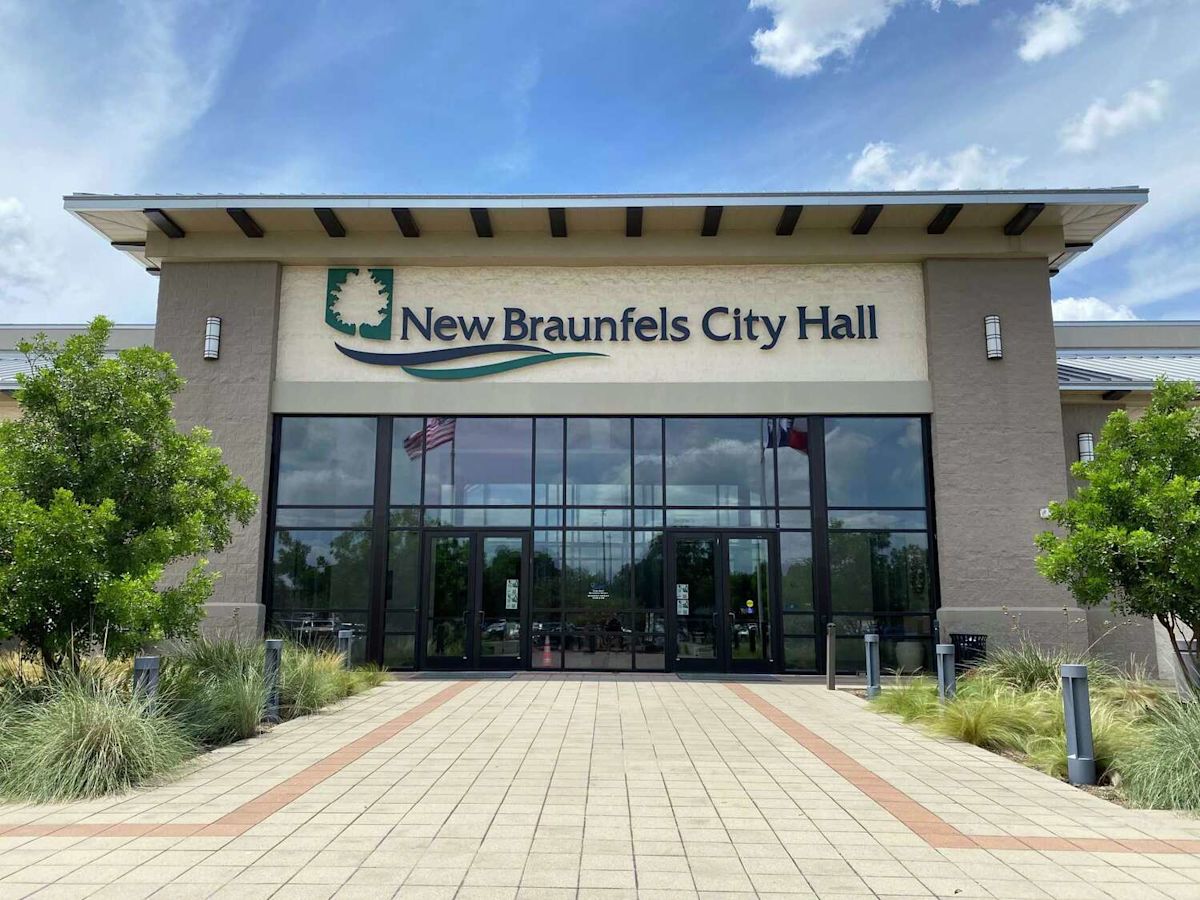
The New Braunfels City Council has voted unanimously against granting a substantial utility fee reduction for a proposed affordable housing complex, though city leaders emphasized their continued backing for the development and instructed municipal staff to explore substitute financing options.
The planned community, known as the Park at Dogwood, is envisioned as a 76-unit residential complex situated at 1869 McQueeney Road. The project is being spearheaded by The Park Companies, a development firm that is currently navigating a significant $2 million funding deficit, according to details shared by Jeff Jewell, the director of economic and community development for New Braunfels.
In an effort to bridge that financial gap, the development team sought relief from the municipality and New Braunfels Utilities, requesting a waiver of up to $500,000 in utility impact fees. These mandatory assessments are standardly levied on all new construction within the municipality to help offset the costs of extending and expanding public infrastructure.
With total utility impact fees for the Dogwood complex estimated at approximately $1.3 million, the requested $500,000 waiver would have amounted to an almost 40 percent discount on the developer's required contributions.
New Braunfels Utilities, which manages the local electric, water, and wastewater systems, operates as a city-owned entity. Under its established governance framework, any formal waiver of system impact fees requires an affirmative recommendation from the city council before moving to the utility's board.
During Monday's formal meeting, council members voted 5-0 to officially advise the utility board against approving the requested discount. Concurrently, the council directed city administration to actively investigate any other feasible avenues that could help the developer eliminate the project's budgetary shortfall. Mayor Michael French and Councilwoman Toni Carter were both absent from the proceedings.
If completed, the Park at Dogwood is designed to provide targeted housing for working families earning between 30 percent and 60 percent of the area median income. Depending on the size of the household, eligible annual earnings would fall within a range of roughly $21,000 to $54,000.
Under the current pricing framework presented to municipal officials, monthly rents across the 76 units would be capped between $424 and $1,196, based on the specific floor plan and the verified income tier of each qualifying household.
Official municipal records indicate that the entire development carry an estimated overall price tag of roughly $22.3 million. The financial model originally relied primarily on federal Low-Income Housing Tax Credits, which were successfully secured by the developer in 2024.
However, the timeline and economic structure of the build were disrupted after the Federal Emergency Management Agency issued updated floodplain maps for the property's surrounding area. The regulatory revisions necessitated an extensive engineering redesign, causing prolonged delays that ultimately eroded the equity yield of the tax credits from an initial projection of $17.6 million down to roughly $15.7 million.
Beyond the utility fee debate, municipal documentation outlines other potential cost-saving measures, including the prospective waiver of approximately $250,000 in municipal roadway impact fees. Additionally, the developer has already structured a collaborative partnership with the New Braunfels Housing Authority, a move that secures an exemption from local property taxes on the land to further reduce operating deficits.
Despite expressing broad enthusiasm for expanding the local inventory of affordable housing, council members remained firm in their conviction that utility funds should not serve as the vehicle for closing private financing shortfalls.
Councilwoman Nikki Shaw voiced strong reservations regarding the concept of waiving infrastructure fees at a time when standard residential and commercial utility rates have seen annual hikes since 2023 to pay for ongoing system improvements. Describing the contradiction as problematic, Shaw maintained that development-related infrastructure demands must still be financed and suggested that the New Braunfels Economic Development Corporation—which oversees dedicated sales tax revenue aimed at local economic stimulation—would be a far more appropriate entity to provide a funding incentive.
The council's stance also served as a defense of the project against skeptical public commentary. Council members firmly pushed back on remarks from local resident Eva Pepitone, who argued that the complex would harm the neighborhood, overwhelm local schools, and introduce a high concentration of single-parent households that might lack after-school availability for childcare and homework support.
Councilman Michael Capizzi rejected those characterizations, arguing that such assumptions do not reflect the character of the community. Framing the initiative as a constructive helping hand, Capizzi stated that while he opposed drawing from utility accounts, he fully endorsed finding alternate municipal mechanisms to support the development's realization.
Echoing that sentiment, Councilman D. Lee Edwards offered a personal perspective on the necessity of accessible housing, recalling a period in 1977 when financial hardship forced him and his family into a $125-a-month single-wide mobile home in South Carolina with a newborn infant. Edwards emphasized that affordable developments serve as vital tools that empower everyday individuals to overcome economic adversity, urging city staff to find workable solutions to keep the Dogwood initiative alive without placing the burden on utility ratepayers.






(0)