
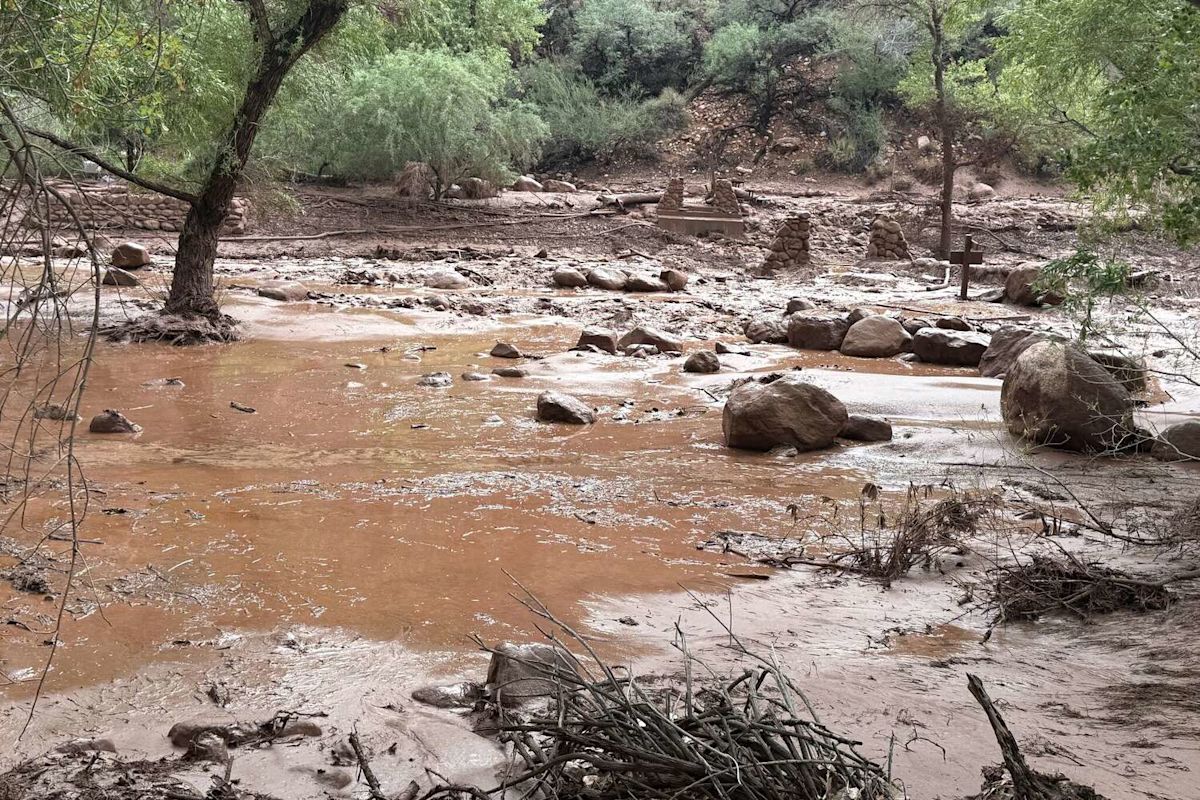
A catastrophic flash flood has struck Grand Canyon National Park, with over 20 people feared missing following the sudden deluge. The disaster unfolded in the park's Bright Angel Canyon on Saturday afternoon, when an intense thunderstorm unleashed more than an inch of rain in less than an hour, overwhelming the area's already compromised infrastructure.
The flood, which was exacerbated by recently burned areas, sent a torrent of mud and debris cascading through the canyon. Water levels rose alarmingly, exceeding five feet within just 10 minutes, and bridges across Bright Angel Creek were swept away, rendering one of the park's most challenging trails impassable.
The National Park Service (NPS) has been mobilizing extensive search and rescue efforts, including the airlifting of 62 campers and hikers from the affected area. However, as of Sunday afternoon, the NPS warned that more than 20 individuals remain unaccounted for, with the potential for additional casualties as search operations continue.
In a statement, the NPS urged anyone with information regarding hikers or backpackers in the inner canyon along the Bright Angel Creek corridor on August 29 to come forward. The agency also requested assistance from the public to identify individuals who may have been traveling along the North Kaibab Trail, staying at Bright Angel Campground, or camping in the area known as "the Box" north of Phantom Ranch.
As part of the response efforts, Phantom Ranch, Bright Angel Campground, the Phantom Ranch canteen, and cabins, as well as the North Kaibab Trail, have been closed. The Colorado River has also been closed to traffic due to debris entering the waterway. The Black Bridge and Silver Bridge crossings over the Colorado River have also been sealed off.
Park officials warned that additional inner canyon closures may be necessary as the forecast calls for more thunderstorms and heavy rainfall on Sunday and Monday, which could potentially unleash further flash flooding.
Cell phone service in much of Northern Arizona is already spotty, and the park service warned that maintaining a signal is nearly impossible in the area. Satellite phones have been tested with some success in certain locations outside the narrowest parts of the canyon.
The flash flood follows the devastating Dragon Bravo Fire, which swept through the Grand Canyon's North Rim last year and destroyed a historic lodge. The fire has altered the landscape, making the soil more susceptible to water and increasing the risk of debris flows.
The National Weather Service issued a flash flood warning for the Grand Canyon, with a slight risk of excessive rainfall capable of triggering flash flooding across the Four Corners region on Monday. A moderate risk is in effect in south-central Utah.
The sudden and devastating nature of the flash flood at Grand Canyon has highlighted the fragility of natural landscapes and the unpredictable power of nature. The ongoing search efforts are a testament to the resilience and determination of the NPS and the community to account for all those affected by this tragic event.







(0)